Staging Furniture 101: How Designers Furnish a Home to Sell
You’re getting ready to list, and the questions start piling up: Does every room need to be furnished? Should you work with what you already own? What pieces will make the rooms feel right? And is renting furniture enough, or do you need a professional stager to make it all work?
Welcome to staging furniture 101, where we break down how professional stagers choose furniture, why scale and placement matter, where the pieces come from, and how the right staging furniture can help buyers see more value in a home from the moment they walk in.
What Is Staging Furniture?
Staging furniture is temporarily selected and installed to prepare a property for sale. Unlike furniture chosen for a homeowner’s personal taste, it’s selected around the home’s architecture, scale, price point, and the buyer the property needs to attract.
Its real purpose is to help those buyers see the home’s potential and feel its value faster. The right furniture clarifies how rooms function, supports perceived value, and creates an immediate connection that leads to stronger offers and less time on the market.
Why Furniture Matters When Staging a House
The right staging furniture shows buyers what the space can be, what it’s worth, and why they'll love the space it’s in.
Furniture Makes Scale Feel Clear
Empty rooms are surprisingly deceptive. A large living room can actually appear smaller without anything to anchor it, while undersized furniture makes a substantial space feel oddly hollow. Staging creates immediate visual reference, so dimensions go from abstract to real.
Furniture Gives Every Room a Purpose
That open landing could feel like leftover square footage, or like the perfect home office. A sprawling great room could look cavernous, or effortlessly accommodate dining, lounging, and conversation. Good furniture staging takes the question “What would I do here?” off the table.
Furniture Shapes How Buyers Move
Furniture invites buyers into a room or stops traffic cold. Professional home staging considers pathways, spacing, sightlines, and how one room flows into the next. Shift a chair, open a walkway, turn a sofa toward the view, and the entire room starts breathing differently.
Furniture Highlights What Matters Most
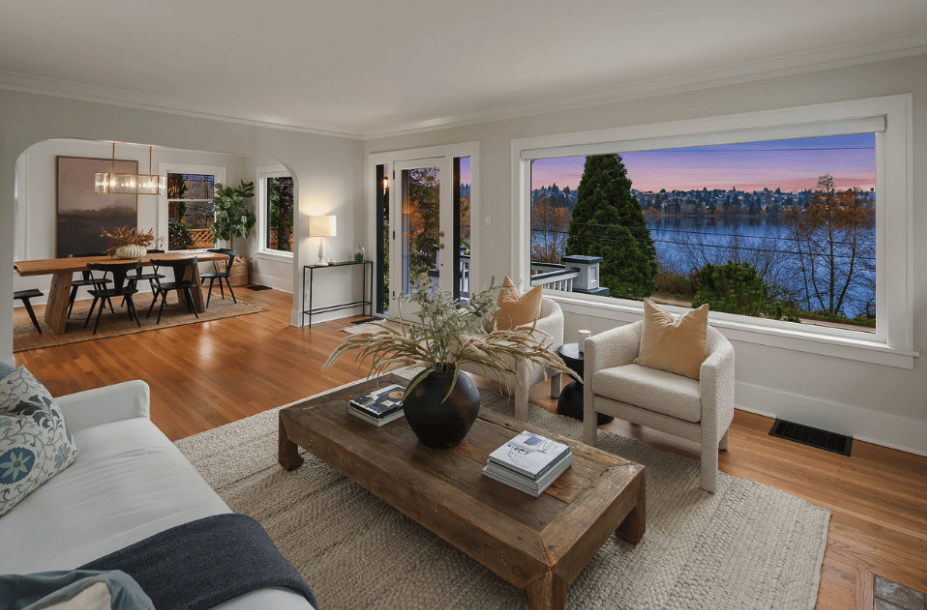
Great staging furniture knows when to step aside. A seating arrangement frames a Lake Washington view. The right chairs point buyers toward a fireplace rather than compete with it. Furniture becomes the supporting cast while the home stays the star.
Where Do Home Stagers Get Their Furniture?
There’s no single model. Some staging companies rent pieces from outside vendors, while others maintain smaller private collections. Larger staging companies own extensive inventories they can pull from for each property.
In our opinion, that depth of inventory matters. More options mean a designer has access to pieces that truly fit the home’s scale, architecture, price point, and target buyer instead of forcing the property to work around whatever happens to be available.
It also makes it easier to create a cohesive look throughout the home, stage unusual spaces properly, and match the level of finish buyers expect from a higher-end listing.
Inside Seattle Swank’s 47,000-Square-Foot Warehouse

Let’s step inside our 47,000-square-foot warehouse, where every piece is chosen with a future listing in mind.
Furniture, Rugs, Art, and Finishing Layers
Sofas, sculptural chairs, dining tables, beds, consoles, coffee tables, and side tables create the foundation. Rugs establish zones and proportion, especially in expansive open layouts.
Then art, lighting, textiles, and accessories finish the composition. The key word is finish. Accessories should add polish and personality without multiplying across every surface until the house disappears beneath them.
Big Inventory for Different Homes
A contemporary Seattle condo shouldn’t wear the same outfit as a sprawling Mercer Island home. A Bellevue new build may call for crisp, architectural pieces, while a Medina estate needs furniture substantial enough to hold its own against larger rooms and luxury finishes.
Our extensive inventory allows for home staging that responds to the actual property rather than reaching for a generic “Seattle look.”
How Designers Choose Staging Furniture: 6 Simple Steps
How to stage a home comes down to choosing pieces with purpose, then using them to support the architecture, the buyer, and the way the home needs to be experienced.
#1. Let the Architecture Lead
First, understand the house. Is it modern and angular? Traditional and detailed? Airy? Moody? Dramatic? Furniture should converse with the architecture, not argue with it.
#2. Stage for the Buyer, Not the Seller
Professional real estate staging designs for the person most likely to purchase the property, not the person moving out of it. That influences everything from furniture style to how spaces are used and which lifestyle cues feel appropriate.
#3. Get the Scale Right
“Use small furniture to make the room look bigger” sounds clever until a tiny sofa floats awkwardly in a substantial living room. Scale has to feel believable. Furniture that’s too small actually emphasizes empty space, while oversized pieces have the potential to choke a room.
#4. Make the Best Feature the Focal Point
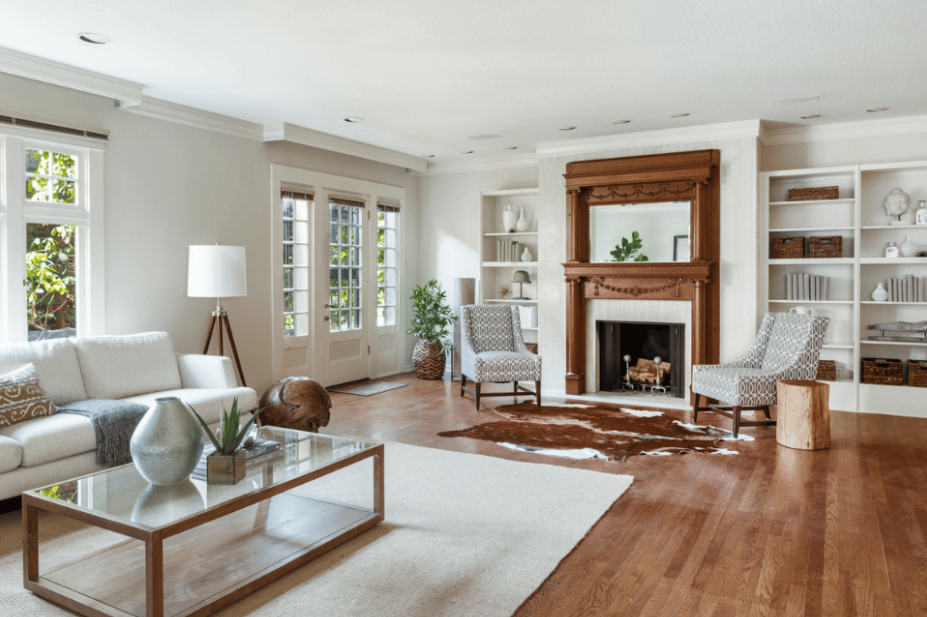
One of our favorite techniques for staging a home is remembering that every room needs a reason for the eye to land. Maybe it’s a fireplace. Maybe it’s the water view. Maybe it’s a striking dining space. Furniture placement should point buyers toward that feature almost instinctively.
#5. Create a Cohesive Story
Rooms don’t need to match like a catalog set, but they should feel related. Repeating certain materials, tones, shapes, or design ideas creates rhythm as buyers move through the house.
#6. Layer in the Details
Once the foundational furniture works, rugs, artwork, lighting, textiles, and accessories add dimension. Think punctuation, not paragraphs.
Check out our portfolio to see examples of this process in stunning homes across Seattle.
Full vs. Partial Staging: What Does Your Home Need?
Not every property needs the same amount of furniture. Full-home staging works especially well when staging a vacant home, new construction, or a property that needs a completely new presentation.
Partial staging allows designers to work with what’s already there, perhaps replacing an oversized sofa, adding dining furniture, bringing in rugs, swapping dated chairs, or furnishing an empty room.
Luxury staging furniture takes that strategy further. High-value homes need inventory with the scale, craftsmanship, materials, and presence to support the property’s positioning rather than dilute it.
Can You Rent Staging Furniture From Seattle Swank?
Yes. Seattle Swank offers furniture rental for staging through its extensive private inventory.
But the value isn’t simply gaining access to a warehouse. You’re also getting designers who determine which rooms need attention, what furniture fits the architecture and scale, how it should be arranged, and which art, rugs, and accessories complete the picture.
Inside Seattle Swank’s Staging Process
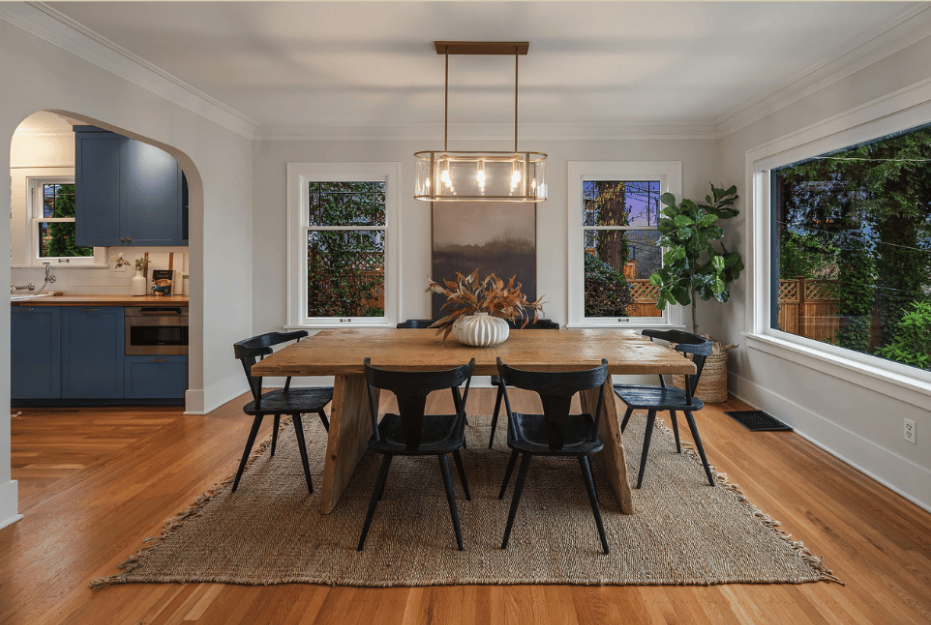
Staging a home to sell is our bread and butter. First, we walk through the property and assess the home, selling goals, and staging needs. Then we build a staging plan outlining the scope, concept, schedule, and pricing.
From there, our designers select pieces from the warehouse specifically for that home, considering scale, architecture, focal points, and how each room needs to function for buyers.
Seattle Swank then manages delivery, installation, styling, and eventual removal, so the seller or agent gets one streamlined process instead of juggling multiple furniture and logistics vendors.
How Much Does Staging Furniture Cost?
Furniture rental and styling packages start at roughly $500–$2,500 per month, depending on how much inventory is required. Vacant-home staging that includes furniture, design, and installation typically ranges from about $3,000–$8,000+.
Every property is different, so if you’re wondering how much does it cost to stage a home, the most accurate number comes from a custom staging proposal based on the space and scope.
Furniture Rental vs. Professional Staging: What’s the Difference?
Furniture rental gives you furniture. Professional staging gives that furniture a purpose: establishing scale, shaping flow, and helping buyers understand the room faster.
With basic rental, you may still be choosing pieces, planning the layout, and coordinating logistics. A professional stager handles that strategy for you. And that professional staging sells the experience of living there, using every piece to support the home’s value.
Why Seattle Homes Need a Local Staging Eye
Seattle Swank stages homes across Seattle and the Eastside, including Bellevue, Medina, Mercer Island, Kirkland, Redmond, Woodinville, Sammamish, and surrounding communities.
But “Seattle staging furniture” isn’t a single aesthetic. The right pieces should respond to the home itself: its architecture, views, light, proportions, neighborhood, price point, and buyer.
A glassy Bellevue new build, a wooded Mercer Island retreat, and a character-rich Seattle home shouldn’t feel interchangeable. Great staging picks up on what makes each property distinctly itself and builds from there, so the final presentation feels oh-so-natural to the home.
Furnish Your Listing to Sell With Seattle Swank
Don’t just fill your listing. Stage it to sell. With a 47,000-square-foot warehouse of premium furnishings, artwork, rugs, and accessories, and designers who know exactly how to use them, Seattle Swank creates spaces buyers can understand, experience, and want to own. Reach out to stage your home today.
Staging Furniture: Frequently Asked Questions
Is paying for staging worth it?
Yes. Professional staging helps buyers understand the home faster, strengthen perceived value, and make the property feel more complete in photos and showings. The goal is to make the home easier to want, not simply prettier.
Where do stagers get their furniture?
Home stagers typically use one of three sources: third-party rental companies, their own private inventory, or a mix of both. Some also source pieces through trade vendors or retail partners when a property calls for something specific.
What are the biggest staging mistakes?
Common mistakes include using furniture that’s the wrong scale, overfilling rooms, ignoring traffic flow, choosing pieces that fight the architecture, and treating every home like it needs the same look. Good staging should make the space clearer, not busier.
Does every room need staging furniture?
No. Some properties benefit most from staging key rooms, while vacant or luxury homes may need a more complete installation. The right scope depends on where furniture will have the greatest impact on buyer perception.
How much does it cost to rent furniture for staging?
Furniture rental for staging often runs about $500–$2,500 per month, depending on how many rooms are being furnished and the quality of the inventory. Full vacant-home staging typically costs more, often around $3,000–$8,000+, because it also includes design, delivery, installation, styling, and removal.
Can stagers use my existing furniture?
Yes. Partial staging can work with what’s already in the home, then layer in selected furniture, rugs, artwork, or accessories where needed. Sometimes the best strategy is editing and supplementing, not replacing everything.
Is it better to show a house empty or furnished?
In many cases, furnished is better because furniture helps buyers judge scale, understand how rooms function, and picture daily life in the home. Empty rooms can be surprisingly hard to read, especially when the layout is large or unconventional.
When should staging furniture be installed?
Ideally, staging furniture should be installed before professional listing photography. That way, buyers’ first impression of the home online reflects the full staging strategy rather than an unfinished version of the space.